Category Archives: Uncategorised

Urban Transitions 2022 conference – Poster presentation by Dr Charlotte Wendelboe-Nelson

OPENspace Research Associate, Dr Charlotte Wendelboe-Nelson, recently presented a poster at the Urban Transitions 2022 conference in Barcelona, Spain. Her poster, ‘Your favourite park is not my favourite park: A participatory geographic information system approach to improve urban green and blue spaces: A case study in Edinburgh, Scotland’ highlighted research work done as part of the project Edinburgh’s Thriving Green Spaces. The poster illustrated a Maptionnaire approach, which was successfully used to obtain information through a public participation process, highlighting the presence of contested spaces in Edinburgh and the need for gender-focused UGBS research to minimise gender-related barriers.

The conference aimed to promote healthy urban development by bringing together different disciplines working within cities. World leading experts on urban and transport planning, architecture, environmental exposure assessment, environmental epidemiology, physical activity, climate change, and public health and governance came together to discuss current challenges and solutions.

https://www.elsevier.com/events/conferences/urban-transitions

National Recreation and Park Association (NRPA) highlights the work of OPENspace Research Fellow, Scott Ogletree

A recent article published by the National Recreation and Park Association (NRPA) highlights the work of OPENspace Research Fellow, Scott Ogletree, and colleagues at North Carolina State University in evaluating changes to local parks in Baltimore, MD, USA. The piece in NRPA’s Parks & Recreation Magazine covers evaluation of park improvements compared to a control park. Work included observations, interviews, and the use of mobile phone location data. Scott’s experience in location data helped him obtain and analyse multiple years of mobile phone data to determine how visits changed after the renovation of park features, such as updating play areas and adding a new splash pad. Overall, the evaluation found positive results of the park improvements. The mobile phone data corroborated evidence from interviews about how park use increased.  

Hipp, J.A., Deutsch, K., Dunstan, C., Jones, J. and Ogletree, S. (2022) Evaluating the 2019 Parks Build Community Project. Parks & Recreation Magazine. December, 2022. https://ezine.nrpa.org/nrpa/ParksRecreationMagazine/december-2022/index.php#/p/40   

Landscape and Wellbeing Research Fellow post

Applications are invited for a Research Fellow in the field of Landscape and Wellbeing. The post will be based in the OPENspace Research Centre, within the Edinburgh School of Architecture and Landscape Architecture (ESALA), in collaboration with colleagues in the Centre for Research on Environment, Society and Health (CRESH) in the School of GeoSciences, and the School of Health in Social Sciences.

The successful post-holder will work across two interdisciplinary research projects:

  • GroundsWell, a UK Prevention Research Partnership-funded consortium that applies systems science theory to maximise the contribution of Urban Green and Blue Space to the primary prevention of, and reduction of inequalities in, non-communicable diseases in urban settings; and
  • WIAT2, an ESRC-funded study using secondary data to examine whether a programme of physical and social interventions in urban forests enhances community health and wellbeing.

Depending on the successful candidate, we can offer the role at 0.8FTE (28 hours per week) for 45 months or 1.0FTE (35 hours per week) for 31 months. 

The closing date for applications is 9th January 2023, and the job posting (as well as the link to apply) can be found in its entirety here.

Introducing the BlueHealth Toolkit

In this video, produced by the Estonian University of Life Sciences, OPENspace Co-Director Dr Simon Bell introduces the BlueHealth Toolkit – a validated, tested and free resource for urban planners and designers to use when working on new blue space projects. The toolkit is particularly useful for conducting before and after assessments of a blue space, so that the success of a project can be evaluated. The BlueHealth Toolkit was created as part of the EU Horizon 2020-funded BlueHealth project – a pan-European research initiative that investigated the links between urban blue spaces, climate and health.

Video credit: @EestiMaaulikool

Dr Simon Bell receives ECLAS Lifetime Achievement Award

On Tuesday 13 September, at the annual conference of ECLAS (the European Council of Landscape Architecture Schools) held in Ljubljana, Slovenia, it was announced by the President, Dr Ellen Fetzer, that Dr Simon Bell is to receive the 2022 ECLAS Lifetime Achievement Award in recognition of his long career in and contribution to landscape architecture practice, research and education.

Simon started his career in the British Forestry Commission in 1979 and, after 20 years of work in forests in the UK and internationally, in 2000 he moved into academia at Edinburgh College of Art, co-founding the OPENspace Research Centre of which he is now co-director together with Professor Catharine Ward Thompson.

In the mid-2000s he also took up a position at the Estonian University of Life Sciences where he is currently Chair Professor and Head of the department of Landscape Architecture. He has been active in ECLAS since 2005, serving on the executive committee, culminating with two terms as President between 2012 and 2018.

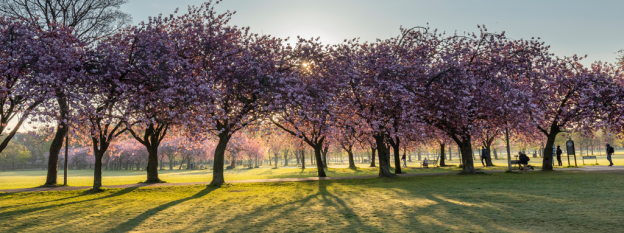
Meadows Image

Great lectureship opportunity to contribute research-led teaching in Landscape and Wellbeing as part of University of Edinburgh, ESALA and OPENspace

The Edinburgh School of Architecture and Landscape Architecture (ESALA) are looking for a Lecturer in Landscape and Wellbeing to join them on a full-time basis. This is an exciting opportunity to teach in one of the few schools to combine teaching, research, and practice in Architecture and Landscape Architecture.

The closing date for applications is 25th August, and the job posting (as well as the link to apply) can be found in its entirety here.

The Opportunity:

Applications are invited for the post of Lecturer in Landscape and Wellbeing (open-ended, 1.0 FTE, UoE Grade 8) at the Edinburgh School of Architecture and Landscape Architecture (ESALA) at the Edinburgh College of Art (ECA), University of Edinburgh.

Candidates should possess a PhD or equivalent evidence of research experience.  The appointee will have good knowledge of a range of theories which attempt to explain the relationship between landscape and wellbeing, and of a range of research paradigms and methods used to explore and understand this relationship. Candidates must have experience in undertaking relevant research projects and should be familiar with a range of quantitative, spatial and qualitative methods for acquiring data and appropriate analysis techniques, including statistics, spatial and textual analysis.

The candidate will have undertaken training in learning and teaching at postgraduate level and/or have experience of teaching at this level in a higher education context and will be able to demonstrate an ability to develop innovative practice in relation to education in landscape and wellbeing.

The appointee is expected to be actively involved in research and situate their own scholarship strategically within ESALA and beyond.  Post-holders will be expected to contribute research-led teaching in Landscape and Wellbeing, thereby enhancing the culture of research, learning, and teaching within ECA and the wider University.  The appointee will be expected to communicate and disseminate their work effectively, contributing to ESALA’s international reputation for research and scholarly excellence.

The appointee’s teaching contribution will depend in detail on specialism, knowledge and experience, but it will primarily be focussed on supporting the planning, management and delivery of the Master of Science in Landscape and Wellbeing within ESALA, as well as contributing to associated undergraduate and postgraduate programmes in Landscape Architecture.  ESALA is seeking candidates able to contribute to courses covering theory, research design and methods, data acquisition, and analysis and tutoring support for Masters-level dissertations within the Landscape and Wellbeing programme. The candidate should demonstrate an understanding of the landscape as a planned, designed and managed environment as well as the ways in which people engage with and experience that environment, and the health and wellbeing consequences of such engagement.

The post holder will have the capacity to supervise postgraduate research students through traditional thesis and/or through practice-led scholarship.

Your skills and attributes for success:

  • PhD or equivalent research experience in a relevant subject such as environmental psychology, planning, landscape architecture, public health, sociology, health geography or epidemiology
  • Relevant experience in undertaking and contributing to relevant research in landscape and wellbeing
  • Expertise in research methodologies appropriate to landscape and wellbeing
  • A research profile as evidenced by a track record of and ongoing commitment to high-quality published research outputs (through published academic research or design-based research outputs).
  • An ability to contribute to a specialism in landscape and wellbeing education, and to innovative research-led teaching in the subject

Click here for a copy of the full job description and full list of selection criteria

Applications should include a cover letter, a CV, and a portfolio of personal and student work. Applicants either can submit three letters of reference with their initial applications, or can provide contact details for referees to be contacted only if successful at the shortlisting stage.

Nature, Health and Well-being CPD course at the University of Exeter

Nature, Health and Wellbeing Continuing Professional Development Course 2022 

I am pleased to share with you a brand new course, Nature, Health and Well-being CPD,which will run virtually on Zoom over 4 days on Tuesdays and Thursdays from 9:00 – 13:00 UK  on the 22nd and 24th March and 5th and 7th April 2022 from the comfort of your home and/or office without the need to travel. 

The course will explore how natural environments can benefit the physical and mental health of people in a variety of different ways. It will address the relationship between nature and health, how the relationship works, why this matters for the environment, public health and sustainability, as well as how you can apply these learnings in your own practice. We will investigate the potential for the natural environment to be harnessed as a resource to improve human health and wellbeing.  The potential mechanisms, moderators, and applications for these health benefits will be explored, considering large data sets and key studies linking nature and exposure and health, both within the UK and around the world. 

We have a fantastic team of experts from the European Centre for Environment and Human Health contributing to the course, some of whom have led on the Nature and Prescription Handbook and have authored the WHO ‘call to action’ on nature, biodiversity and health. There are no pre-requisites or specialist knowledge required to undertake this course, which is well suited to interdisciplinary learning. 

For further information about the course programme, please visit our website: https://medicine.exeter.ac.uk/cpd/naturehealth/  

Book now at this link

Join Us for our Spring 2021/2022 Seminar Series!

Tuesday 5th April 2022

Speaker: Sara Tilley & Caroline Pearce,  ECA Research Fellow & Research Associate, Architecture and Landscape Architecture  

Book your tickets for this online seminar here!

Tuesday 22nd March 2022

Speaker: Charlotte Wendelboe-Nelson,  ECA Research Associate, Architecture and Landscape Architecture

Book your tickets for this online seminar here!

Tuesday 8th March 2022

Speaker: Weijing Wang,  PhD student with ESALA, Edinburgh College of Art

Book your tickets for this online seminar here!

Weijing is a PhD student interested in the landscape perception, big data, spatio-temporal social practice, human-environment interaction in the age of social media. Her current DPhil research focuses on landscape preference, digital visual culture and visual methodologies. Weijing’s thesis examines 1) The representation of digital images and the practice of how people produce and share them. 2) The relationship between changing urbanisation and sightseeing practice of local people and tourists in contemporary Chinese cities 3) The role of photo-taking and photo-sharing behaviour in understanding landscape preference through using visual methodologies. The over-arching aim is to explore the richness user-generated materials from social media and the visual methodologies in examining landscape perception. Weijing’s current research utilise a wide range of methods, from large scale digital data analytics to in-situ semi-structure interviews.

Seminar Title: Gaze through social media: spatio-temporal activities of photo-taking and photo-sharing in the city

The burgeoning digital images from social media are saturated in people’s everyday life, for instance, a great many of apps on the smart phone are involved with images, such as Facebook, Instagram and Flickr. These user-generated data are commonly utilised in detecting content to explore people’s general perception of study areas, often neglecting the behaviour of photo-taking and photo-sharing from the perspective of landscape perception. Two studies are conducted to examine the “prospect – refuge” theory and further explore more about space of vision and observation.