Tag Archives: Prof Catharine Ward Thompson

Improved Scottish woodlands linked to reduced antidepressant use

Improving and maintaining woodlands in deprived communities is linked with reduced antidepressant and anti-anxiety medication use, research suggests.

People living in deprived communities are less likely to use medication for depression and anxiety if they have easy access to well-maintained woodlands, the study found.

Researchers at the Universities of Edinburgh and Glasgow analysed data from more than 129,000 people over five years.

The study is one of the largest analyses of its kind, assessing how investments in local woodlands in and around towns in Scotland affect people’s mental health.

Woodland areas

The researchers used NHS prescription records and census data to see whether people living within a 10-minute walk of an improved woodland area were more or less likely to be taking medication for depression or anxiety.

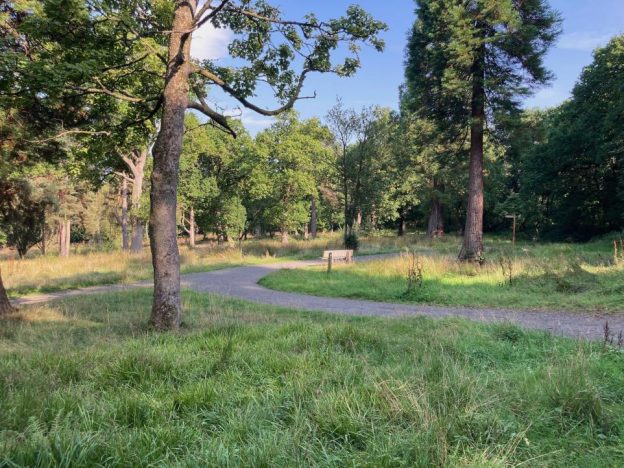
Woodland improvements had been supported through Scottish Forestry’s Woods In and Around Towns (WIAT) initiative, which provided funding for practical improvements such as new footpaths, better signage, and community events.

Reducing barriers

The initiative prioritised areas that were more socially and financially disadvantaged, where woodlands required improved management to reduce barriers and enable more local people to use and enjoy them.

People living in urban deprived communities that were close to a woodland area that had been made more welcoming and easier for people to use were 10 per cent less likely to be prescribed antidepressants and six per cent less like to be prescribed anti-anxiety medication, than those living further away.

Mental health outcomes

This was the case even when accounting for other factors linked to mental health outcomes, such as demographics and poverty. 

The benefit of living near these woodlands showed up for the same people even when their proximity to these woodlands changed. For example, when someone moved closer to an improved woodland, their need for medication went down.

By tracking the same individuals over time, the researchers say they can be more confident that it was the woodland improvements making the difference, rather than simply healthier or wealthier people happening to live in greener areas.

“The research provides stronger evidence on the mental health benefits of woodland improvements for local communities than was possible in earlier studies. It also shows that these benefits may contribute to reducing inequalities in health across the population.”

Professor Catharine Ward Thompson

“For the first time, we have an opportunity to link data on mental health services with a long-term national urban forestry intervention programme to offer the kind of evidence required to inform future forestry policy. Our results tell us that relatively modest investments in local greenspaces can make a real difference to people’s mental health. Nature-focused initiatives like Woods In and Around Towns (WIAT) can be a valuable tool to complement ongoing efforts to improve wellbeing and mental health.”

Dr Scott Ogletree

Nature-based interventions

Around one in eight people globally live with a mental health condition, and those in poorer communities tend to be hit hardest. At the same time, these are often the communities with the least access to good quality parks, woodlands, and greenspaces.

The researchers say that their findings make a case for integrating nature-based interventions into public health strategies, particularly in urban areas where greenspace can be limited and poorly maintained in certain neighbourhoods. 

Research partnership

The research team have worked with experts from Scottish Forestry and Forest Research for over 20 years to gather evidence on the social and health benefits that local woodlands can offer to communities, pioneering work on this topic within Europe.

“This groundbreaking study provides further compelling evidence of the benefits that local woodlands deliver for people and communities. The association between the investment in woods in and around Scotland’s towns and cities, and lower prescription use for depression and anxiety, highlights the importance of continuing to expand, manage and improve these valuable green spaces.”

Jim Fairlie, Minister for Agriculture, Marine and the Islands

The research used census data from the Scottish Longitudinal Study which tracks the lives and health of thousands of people in Scotland to help researchers understand what affects people’s wellbeing.

The study is published in The Lancet Planetary Health. 

The research was supported by the Economic and Social Research Council (ESRC) and the GroundsWell Consortium, a UK-wide research partnership funded by the UK Prevention Research Partnership (UKPRP), that studies how green and blue spaces, can improve health and reduce health inequalities. 

Prof Catharine Ward Thompson to share expertise at Trees and Development 2026

Prof Catharine Ward Thompson has been invited to speak at Trees and Development 2026: Putting Nature at the Heart of Urban Design and Planning Future Woodlands, a conference organised by the Institute of Chartered Foresters.

The one-day event will take place at the University of Stirling on 17 June 2026 and will bring together the people shaping Scotland’s next generation of greener, climate-resilient urban spaces.

The conference will be chaired by Karen Anderson FRSE, President of the Royal Incorporation of Architects in Scotland and a Fellow of the Royal Society of Edinburgh, for whom the subject is of particular personal interest.

With thought-provoking talks, real-world examples and a collaborative design challenge at its heart, the event will provide an opportunity for practitioners, researchers and policymakers to learn, connect and explore how trees and woodlands can help create nature-rich towns and cities.

Prof. Catharine Ward Thompson gives talk at the FOLAR Annual Symposium 2024 on Ecological Public Health

Prof. Catharine Ward Thompson gave a speech at last years FOLAR annual symposium on Ecological Public Health – the future of salutogenic landscapes, which is now available to view online.

The direction Catharine Ward Thompson takes in her research is based on salutogenesis, an approach to human health that examines the factors contributing to the promotion and maintenance of physical and mental well-being rather than disease. Having the types of environment that support good health makes much better economic and cost effective sense for public health. Landscape architecture and management can do a lot to support people in good health through planning, designing and managing the outdoor environment.

Green space is eugenic – it is associated with reducing the difference in health and life expectancy between the most economically deprived people and those better off. There is a need to prove the link between landscape and improved health, and also to determine the mechanisms behind access to green space and health. And this is what Catharine Ward Thompson quietly shares with us here. A lifetime’s research and collaborations with others looking at different age groups, over different time periods and their interaction with a range of landscapes reveals many exciting conclusions, instinctively known and understood by Paxton and Olmsted and Geddes and many others, and here based on peer reviewed evidence. There is huge opportunity with this to fight for and protect the role of landscape anew.

OPENspace Co-Director, Prof Catharine Ward Thompson, honoured with Lifetime Achievement Award

From left to right: Prof Frederico Meireles Rodrigues, Prof Catharine Ward Thompson and Dr Ellen Fetzer. Photo taken by Anna Rhodes.

Professor Catharine Ward Thompson has been honoured with a Lifetime Achievement Award at the European Council of Landscape Architecture Schools (ECLAS) annual conference in Brussels on 10th September 2024.

The award is given to a leading figure in Landscape Architecture, for contributions to research, education, and public service. Catharine has served on the ECLAS steering committee and was involved in hosting an early ECLAS conference in Edinburgh in 1994. She was part of a small group of European colleagues who secured the funding of an EU Culture programme Thematic Network project on Landscape Architecture education, called “Le:Notre”,  in 2001.

Catharine was presented with the award by ECLAS president Dr Ellen Fetzer of Nuertingen Geislingen University, Germany, and ECLAS Secretary-General Professor Frederico Meireles Rodrigues of University of Trás-os-Montes and Alto Douro, Portugal.

Jeroen de Vries, Catharine Ward Thompson, Richard Stiles and Karsten Jorgensen after writing the first ‘Le:Notre’ bid in 2001

Read more about the ECLAS Awards 2024 and other awards recipients: ECLAS Awards 2024 – ECLAS

Prof Catharine Ward Thompson’s essay published in ‘Garden and Metaphor: Essays on the Essence of the Garden’

Catharine Ward Thompson has a short essay published in ‘Garden and Metaphor: Essays on the Essence of the Garden’, a book edited by Ana Kučan and Mateja Kurir and published by Birkhäuser in October 2023. In this book, landscape architects, sociologists, architects, artists, philosophers and historians illuminate different aspects of the garden in the Anthropocene: the garden as a place of community, garden as art, and the garden as a place of enchantment and rapture. The book is in part a tribute to the work of the late Slovenian landscape architect, Professor Dušan Ogrin, whose work over many decades to support education in the profession was untiring, international and inspirational.

Mediaeval flowery mede/pleasaunce: illustration from Roman de la Rose (The Romance of the Rose),
Master of the Prayer Books, Bruges, c. 1490–1500.